200W Power vs 60W Portability: Which Solar Panel Fits You?
These two panels are aimed at very different users, so the right choice depends on what you actually need to power. The Renogy EFLEX-CORE 200W is built for serious charging of power stations, RV setups, and longer off-grid sessions, while the FlexSolar 60W is a lighter, cheaper grab-and-go option for phones, tablets, and small batteries. If you’re a UK renter, flat-dweller, camper, or van user trying to avoid wasting money on overspec’d kit, this comparison should make the decision much clearer.
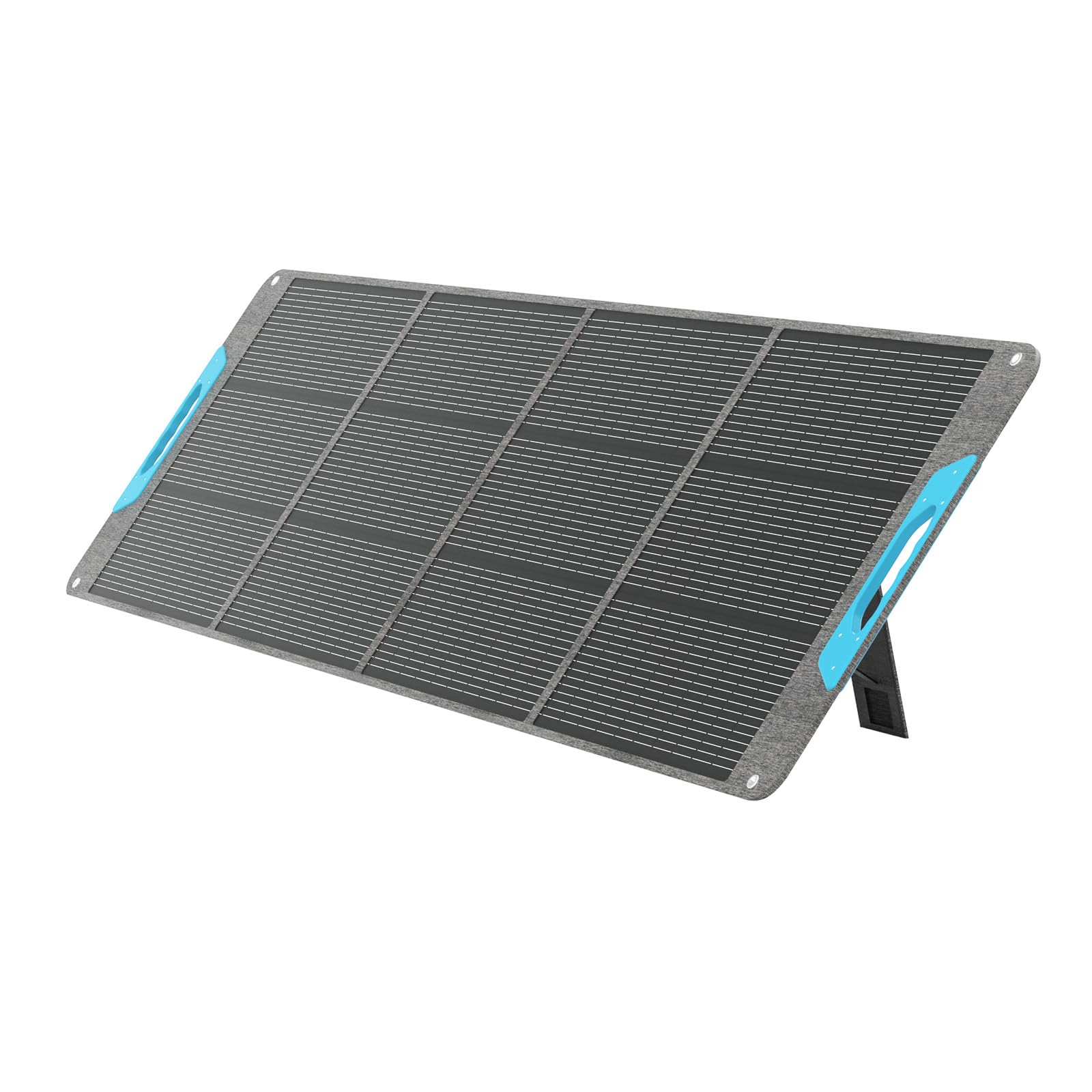
Renogy EFLEX-CORE 200W Portable Solar Panel, IP65 Waterproof Foldable Solar Panel Power Backup, Solar Charger for Power Station RV Camping Off Grid

FlexSolar 60W Solar Panel Foldable Portable Solar Charger with USB-C USB-A and DC Outputs IP67 Waterproof Power Emergency Camping for Small Power Station Generator Phones Power Banks Tablets
Our Recommendation
The Renogy EFLEX-CORE 200W is the definitive winner because it offers dramatically more usable solar output, making it far more practical for power stations, RV use, and UK off-grid charging. Its 200W capacity gives you much better real-world performance in cloudy conditions, where a 60W panel often feels underpowered. If you want a panel that can actually meaningfully charge a battery system, the Renogy is the stronger long-term buy.
Detailed Comparison
Display
Neither product has a display in the traditional sense, so the real question is usability and monitoring. The Renogy EFLEX-CORE 200W is the better choice if you care about predictable solar input into a power station, because higher-watt panels give you far more usable charging headroom and reduce the frustration of seeing tiny input numbers on cloudy days. The FlexSolar 60W is simpler and more basic, but that simplicity is also the point: it’s intended to get a phone, power bank, or small generator topped up without fuss. Winner: Renogy, because its higher output is much more useful for anyone trying to monitor meaningful charging progress.
Performance
This is the biggest gap in the comparison. The Renogy’s 200W rating means it can theoretically deliver over three times the power of the FlexSolar 60W, which matters enormously when charging a portable power station. In UK conditions, where real-world solar yield is often well below the sticker rating, starting with 200W gives you a much better chance of making a dent in a battery before the weather turns. The FlexSolar 60W is fine for emergency top-ups, but it’s not a serious solution for charging a medium or large power station in any reasonable time. If you want to run a fridge, lights, laptop, or CPAP via a battery, the Renogy is the clear winner. Winner: Renogy.
Build quality and design
Both are foldable portable panels, but they are designed for different levels of abuse. The Renogy EFLEX-CORE has IP65 waterproofing, which is solid for rain resistance and general outdoor use, though not fully dust-tight or submersible. The FlexSolar 60W carries an IP67 rating, which is technically tougher against dust and water ingress, so it has the edge on outright environmental protection. However, build quality is more than just sealing: the Renogy’s larger format and higher-output design make it the more substantial, premium-feeling product for regular use, while the FlexSolar is the more compact and travel-friendly option. If you prioritise ruggedness in wet weather, FlexSolar wins on IP rating; if you prioritise a more serious solar setup, Renogy wins on overall design purpose. Winner: tie, with FlexSolar winning on weather sealing and Renogy winning on system capability.
Battery life
Strictly speaking, these are panels, so they do not have internal batteries. But if we translate this into practical charging endurance, the Renogy is far better for extending the life of a connected power station because it can replenish much larger battery capacities over the course of a day. A 200W panel is much more suitable for LiFePO4 power stations in the 300Wh to 2000Wh range, whereas a 60W panel is better suited to power banks and small battery packs. The FlexSolar can keep phones and tablets alive in an emergency, but it will struggle to make meaningful progress on anything bigger. Winner: Renogy, because it supports far larger battery systems and gives you more usable solar energy across a day.
Price and value for money
At £199.99, the Renogy is a serious purchase, but its price is easier to justify if you actually need the output. You are paying for real charging capability, not just portability. The FlexSolar costs £59.99, which is £140 cheaper, and that makes it far better value for casual users who only need emergency charging for small devices. If you only want to top up a phone, tablet, or small USB power bank, the FlexSolar is the smarter buy because the Renogy would be overkill. But if you buy the FlexSolar hoping it will replace a larger solar setup, you’ll likely outgrow it quickly. Winner: FlexSolar for budget value; Renogy for value in serious use cases.
Game library/features
These products don’t have a game library, so the relevant comparison is feature set. The FlexSolar offers USB-C, USB-A, and DC outputs, which makes it very flexible for direct charging without needing extra adapters. That is a big convenience advantage for casual users and emergency kits. The Renogy is more focused on power delivery to a solar generator or power station, which is less flashy but more useful for a proper off-grid system. If your goal is direct charging of consumer gadgets, FlexSolar has the more convenient feature set. If your goal is to feed a battery station efficiently, Renogy is the more capable product. Winner: FlexSolar for convenience features; Renogy for serious solar integration.
Overall user experience
The Renogy EFLEX-CORE 200W is the better experience for anyone who wants solar to actually replace a meaningful chunk of mains charging. It’s the one to buy if you care about charging speed, larger battery support, and getting usable energy in less-than-perfect British weather. The FlexSolar 60W is easier to justify for first-time buyers, renters, and occasional campers because it is cheaper, lighter, and versatile enough for phones and small power banks. But the user experience is limited by physics: 60W is simply not much solar power once you move beyond small gadgets. Winner: Renogy for serious users, FlexSolar for light-duty convenience.
Overall summary: the Renogy EFLEX-CORE 200W is the better solar panel by a wide margin if you want real off-grid charging performance. The FlexSolar 60W is the better budget pick only if your needs are modest and you value low cost, portability, and direct USB charging over raw output.
Buy the Renogy EFLEX-CORE 200W if...
Buy Product A if you want to charge a portable power station, run a small off-grid setup, or get meaningful solar input on UK camping trips. It is the better choice if you own a larger battery pack and want something you won’t outgrow quickly. It also makes more sense if you see solar as a proper energy source rather than an emergency backup.
Buy the FlexSolar 60W Solar if...
Buy Product B if your main goal is to charge phones, tablets, power banks, or a very small generator cheaply. It is ideal if you want a lightweight, budget-friendly panel for occasional use, emergency kits, or short camping trips. If you do not need high wattage and want the most convenient entry point, the FlexSolar is the better fit.
Curated by The Solar Plug on All The Top Picks
As an Amazon Associate we earn from qualifying purchases.