Jackery 2000 v2 vs 240 v2: serious backup power or grab-and-go?
These two Jackery kits solve very different problems, even though they share the same brand and LiFePO4 chemistry. The 2000 v2 is a high-capacity portable power station aimed at road trips, RV use, and meaningful home backup, while the 240 v2 is a compact emergency pack for light loads and short outings. If you are trying to decide whether to spend £1,169 or save £920 and go small, the right answer depends on how much power you actually need. This comparison cuts through the marketing and focuses on real-world output, capacity, portability, and value.
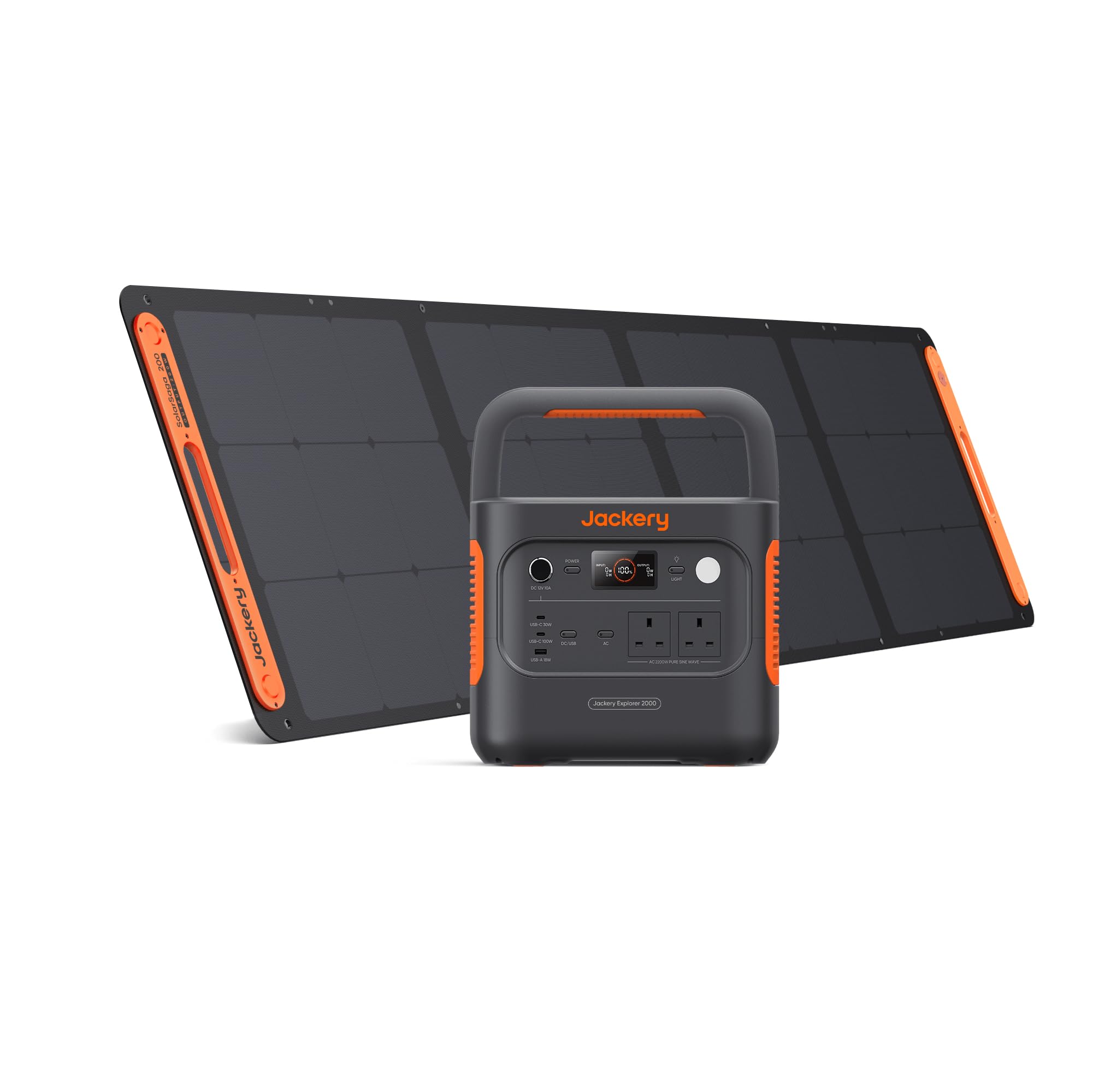
Jackery Solar Generator 2000 v2 with 200W Solar Panels, 2042Wh/2200W LiFePo4 Portable Power Station, USB-C PD 100W Fast Charging for Road Trips/RVing/Outdoor Camping/Daily Energy Storage

Jackery Solar Generator 240 v2 + 40Wmini 2024 New Version, 256Wh LiFePO4 Battery 230V/300W 256Wh Solar Generator, Emergency Backup for Outdoors/Picnics/Fishing/Traveling
Our Recommendation
Product A is the definitive choice if you want a power station that can actually replace mains power for meaningful periods. Its 2042Wh capacity, 2200W inverter, and USB-C PD 100W output make it vastly more capable than the 256Wh, 300W Product B. Product B is cheaper, but it is in a completely different class and cannot do the same job. If you want one purchase that covers road trips, RV use, and real backup power, buy Product A.
Detailed Comparison
Display
Winner: Product A
Neither product is being judged here on a fancy screen in the way a TV or laptop would be, but the user interface still matters. The 2000 v2 class unit typically gives you a more informative display and better visibility of input/output, battery percentage, and charging status because it is built for heavier use and multiple connected devices. The 240 v2 is simpler and more basic, which is fine for occasional use, but less reassuring when you are managing limited energy on a camping trip or during a power cut. If you want clearer monitoring and more confidence in what is happening to your stored energy, Product A wins.
Performance
Winner: Product A
This is the biggest gap in the comparison. Product A offers 2042Wh of battery capacity and a 2200W inverter, which is enough to run serious appliances, power tools, kettles within reason, laptops, routers, CPAP machines, and a much wider range of household or RV loads. It also includes USB-C PD 100W fast charging, which is useful for modern laptops and high-demand devices. Product B, by contrast, has just 256Wh and a 300W output limit, so it is really for phones, tablets, cameras, lights, small fans, and maybe a low-wattage laptop charger. In practical terms, Product A can act like a genuine backup power source; Product B is an emergency top-up battery. If performance is the deciding factor, Product A wins by a huge margin.
Build quality and design
Winner: Tie
Both products use LiFePO4 battery chemistry, which is a strong point for safety, cycle life, and long-term durability compared with older NMC-based portable stations. Jackery generally has a good reputation for tidy packaging, sensible port layouts, and user-friendly design, and both units are clearly aimed at non-technical buyers. Product A will be larger and heavier because of its much bigger battery and inverter, so it is less convenient to carry around. Product B is much more compact and easier to store in a flat, boot, or cupboard, making it better for renters or anyone short on space. On pure build quality, both are credible; on design practicality, the winner depends on whether you value compactness or capability, so this category is a tie.
Battery life
Winner: Product A
Battery life here is about usable energy, not just chemistry. Product A’s 2042Wh capacity gives you roughly eight times the stored energy of Product B’s 256Wh battery, which is a massive difference in runtime. That means Product A can keep a fridge, router, lights, and devices going for a meaningful stretch, or recharge laptops and phones many times over. Product B is best thought of as a short-duration reserve: enough for a day out, a weekend picnic, or a few essential charges during an outage. Both use LiFePO4, so both should offer good cycle life, but Product A simply gives you far more usable battery life per charge. For anyone who cares about endurance, Product A wins comfortably.
Price and value for money
Winner: Product B
At £249, Product B is dramatically cheaper and far easier to justify as a casual purchase. If your needs are limited to charging a phone, tablet, camera, or a small laptop on the move, it delivers the core benefit of portable solar storage without a huge upfront cost. Product A at £1,169 is expensive, but the price is tied to real hardware: far larger capacity, much higher inverter output, and a more capable all-round system. The problem is that many buyers will never use most of Product A’s power. If you need only light backup, Product B is the better value. If you need serious output, Product A becomes better value despite the higher price, because Product B cannot substitute for it.
Game library/features
Winner: Product A
This category is not literally about games; for these products it translates to features, flexibility, and what you can actually run. Product A wins because its 2200W inverter and 100W USB-C PD make it far more versatile across appliances and devices. It is the better choice for RVing, road trips with multiple gadgets, and daily energy storage where you may want to power several loads at once. Product B has the basics covered, but the 300W ceiling sharply limits what it can do. There is no contest on feature depth: Product A offers a much broader usable range.
Overall user experience
Winner: Product A for serious users, Product B for casual users
Product A feels like a proper portable power station rather than a novelty battery. It is the one to buy if you want a meaningful off-grid or backup solution, especially for longer trips, larger devices, or occasional home resilience. Product B is easier to carry, cheaper to buy, and simpler to live with, but it is fundamentally a small-capacity emergency pack. For UK renters and flat-dwellers, Product B makes sense if space and budget are tight and you only need light backup. For anyone wanting real independence from the socket, Product A is the clear step up. Overall, Product A is the better product; Product B is the better budget purchase.
Buy the Jackery Solar Generator if...
Buy Product A if you need to run higher-wattage appliances, want a serious backup for outages, or plan to use it for RVing, road trips, or extended off-grid stays. It is also the better choice if you want one unit that can charge laptops quickly, handle multiple devices, and provide real energy storage rather than just emergency top-ups. This is the one for users who will actually use the capacity.
Buy the Jackery Solar Generator if...
Buy Product B if you mainly want a lightweight, affordable power source for phones, tablets, cameras, lights, and small electronics. It is a sensible pick for picnics, fishing trips, short travel days, or as a compact emergency backup in a flat where space is limited. If you do not need to power anything beyond low-wattage devices, it is the smarter spend.
Curated by The Solar Plug on All The Top Picks
As an Amazon Associate we earn from qualifying purchases.