
240W or 400W ECO-WORTHY: which bifacial solar kit is the smarter buy?
If you’re choosing between these two ECO-WORTHY bifacial solar kits, the real question is simple: do you want the cheapest usable off-grid setup, or the one with enough headroom to make a meaningful dent in your daily energy use? Both products are rated 4.7/5, both are aimed at caravans, campervans, sheds and other off-grid use, and both use monocrystalline bifacial panels. The difference is in output, space efficiency and value per watt, which matters a lot when you’re fitting panels on a roof, van, shed or balcony-sized footprint.
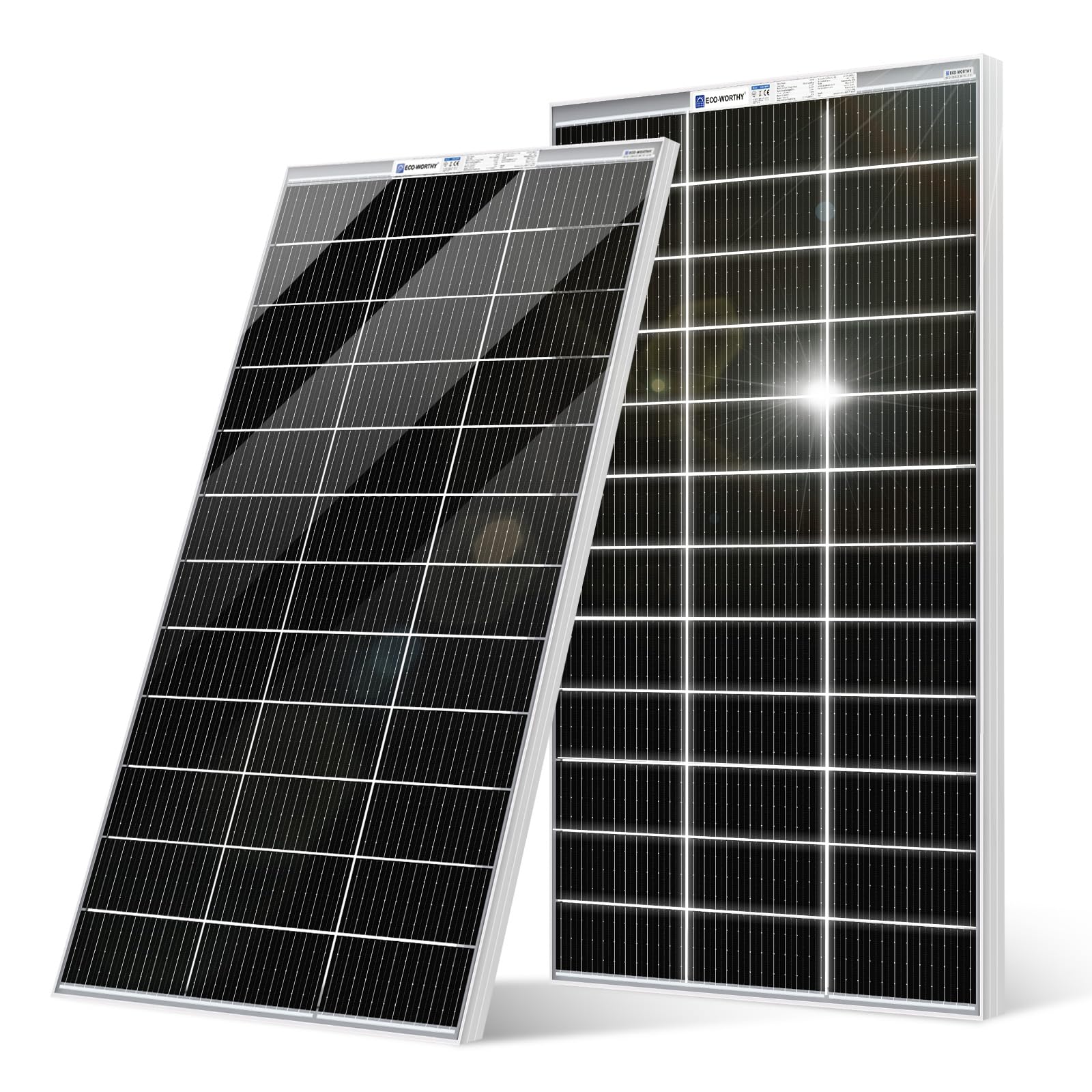
ECO-WORTHY 240W Solar Panel Bifacial 2pcs 120 Watt 12 Volt Monocrystalline Generation Module Off Grid PV Power Charger for Caravan Campervan RV Shed Farm Motorhome

ECO-WORTHY 400W Bifacial Solar Panel 2pcs 195 Watt 12 Volt Monocrystalline Solar Panel Module Off Grid PV Power for Home, Camping, Boat, Shed Farm, Motorhomes
Our Recommendation
Product B wins because it delivers far more solar capacity for only £35 extra, making it the better value and the more capable off-grid system. The jump from 240W to 400W is big enough to matter in real UK conditions, especially for battery charging and cloudy-day performance. If you want a kit that will actually do more work and leave you less reliant on mains power, the 400W option is the smarter buy.
Detailed Comparison
Display
There isn’t a screen here in the usual sense, so the relevant “display” factor is how much panel area and visible surface you’re getting for your money. Product B wins because it gives you 400W total from two 195W panels, compared with 240W total from two 120W panels in Product A. That extra 160W is not just a number on paper: in UK conditions, where winter sun and cloudy days reduce real-world output, having more panel area and more peak capacity usually translates into more usable generation.
Performance
Product B is the clear performance winner. A 400W array can charge batteries faster, support larger loads, and recover more energy on weaker days than a 240W system. For off-grid use, that matters if you’re running a 12V leisure battery, a portable power station, or a small inverter setup for lights, phones, Wi‑Fi, fans, and occasional appliance use. Product A is still useful for topping up batteries, but 240W is better suited to light-duty charging rather than serious daily energy production.
Build quality and design
This is closer than the wattage gap suggests. Both are ECO-WORTHY bifacial monocrystalline panels, so you’re getting the same broad design philosophy: cells that can capture some reflected light from the rear side, which can help in the right mounting conditions. In practical terms, Product B wins because higher-wattage panels usually give you better output density and better system flexibility for the price. That said, Product A may be easier to physically place if you have limited roof or wall space, because the lower total output comes with less installation demand. If your mounting area is tight, size can be a real constraint, and the smaller kit may be simpler to fit.
Battery life
Neither product includes a battery, so battery life really means how effectively each kit can support your battery bank. Product B wins again because more solar input generally means fewer deep discharge cycles on your leisure battery or power station. That helps preserve battery health over time, especially if you’re using LiFePO4, which benefits from regular, well-managed charging. With Product A, a smaller panel array may leave your battery undercharged more often in poor weather, which can force you to rely on mains hook-up or a generator more frequently.
Price and value for money
Product A wins on upfront cost because it is £35 cheaper at £129.99 versus £164.99. But Product B wins on value for money because its price per watt is better: around 41p per watt for Product B versus about 54p per watt for Product A. That is a meaningful difference. If you’re trying to maximise generation per pound, Product B is the more efficient purchase, even though it costs more initially.
Game library/features
Interpreting “features” as the practical features that matter for solar buyers, Product B again comes out ahead because the extra capacity gives you more usable headroom for real off-grid living. A 400W kit is more suitable if you want to run a larger battery bank, support a more demanding inverter, or cover a broader range of loads without constantly watching state of charge. Product A’s main feature advantage is simplicity: lower output often means easier expectations, lighter demands on your system, and a lower-risk purchase if you’re only looking for occasional battery maintenance charging.
Overall user experience
Product B is the better all-round experience for most buyers because it is more future-proof and more forgiving in UK weather. If you’re a renter, vanlifer, or shed user trying to get the most from limited sunlight, extra panel wattage usually matters more than saving £35 upfront. Product A only makes sense if your needs are modest, your space is limited, or you’re buying your first solar kit and want a lower-cost entry point. Otherwise, Product B will feel less compromised and more capable from day one.
Overall summary: Product A is the budget choice, but Product B is the stronger buy for anyone who actually wants meaningful off-grid charging. The 400W kit offers much better generation potential, better value per watt, and a more practical long-term setup for caravans, campervans, sheds and small home off-grid systems. If you can afford the extra £35, Product B is the one to buy.
Buy the ECO-WORTHY 240W Solar if...
Buy Product A if your priority is keeping costs down and you only need light battery top-up for a caravan, campervan, shed or occasional use. It also makes sense if your mounting space is very limited and you don’t need the extra charging speed or reserve capacity. For a modest setup, the lower price is the main advantage.
Buy the ECO-WORTHY 400W Bifacial if...
Buy Product B if you want the best overall value and expect to use the panels regularly for off-grid charging. It’s the better choice for larger battery banks, more demanding loads, or anyone who wants stronger performance in UK weather. If you’d rather buy once and avoid outgrowing the system too quickly, this is the one to pick.
Curated by The Solar Plug on All The Top Picks
As an Amazon Associate we earn from qualifying purchases.