
Big-capacity backup or ultra-light grab-and-go power?
These two EcoFlow and BLUETTI units are aimed at very different users, so the right choice depends on whether you want a serious home-and-camping power station or a tiny emergency bank you can toss in a bag. The BLUETTI AC180 is built for running real appliances and charging fast from mains or solar, while the ECOFLOW Trail 300 DC is a minimalist, low-power portable battery for phones, lights, and small electronics. If you are a UK renter, camper, or flat-dweller trying to avoid overbuying, the difference in capacity, output, and usability is huge. This comparison will make the trade-off clear so you can buy once and buy right.

BLUETTI Portable Power Station AC180, 1152Wh LiFePO4 Battery Backup w/ 2 1800W (2700W peak) AC Outlets, 0-80% in 45Min., Solar Generator for Camping, Off-grid, Power Outage
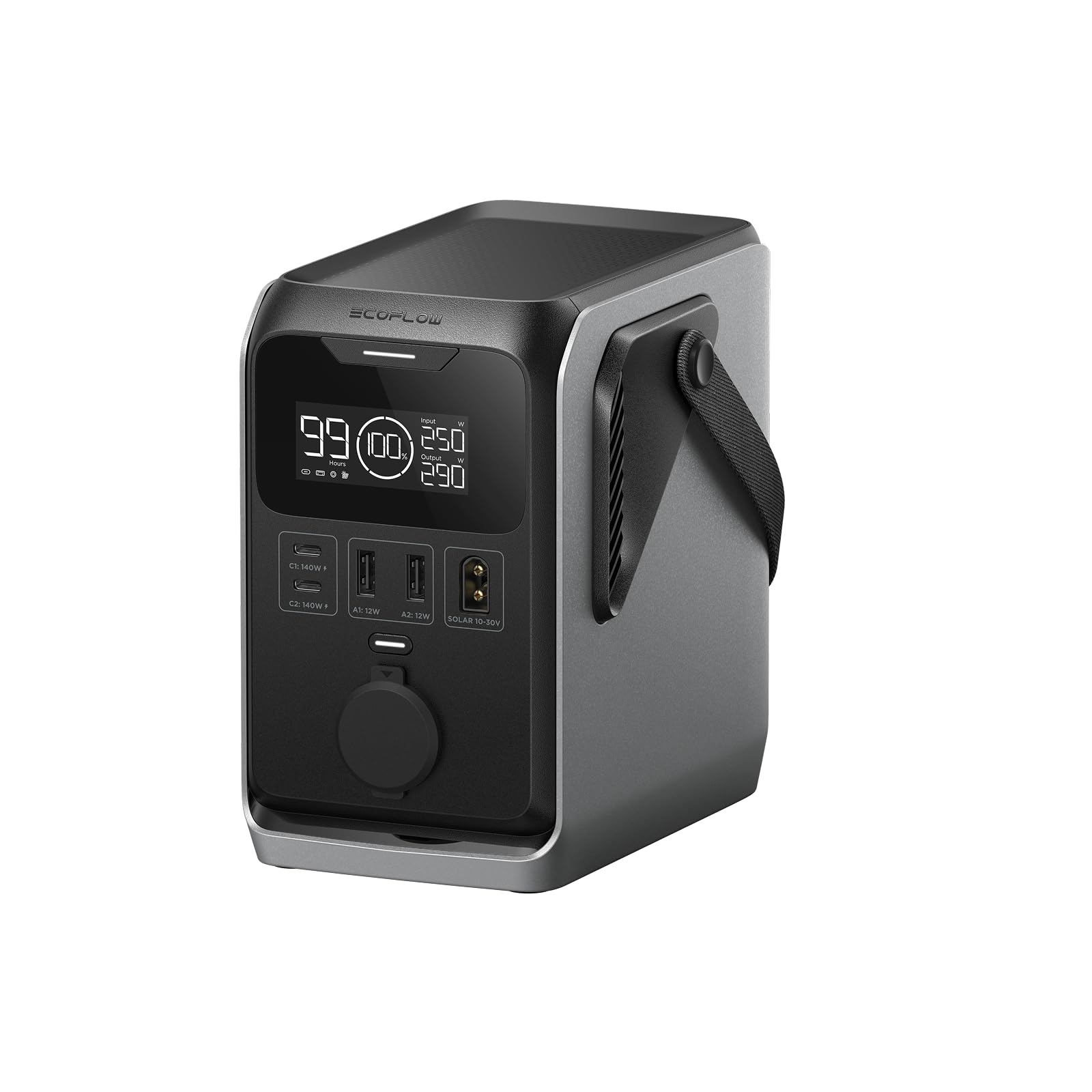
ECOFLOW Trail 300 DC Portable Power Station, 288Wh Ultra-light LiFePO4 Battery Bank, 300W Solar Generator, Fast Charge, 5 Output Port, Drop-Proof, Solar/Car Input, 0 Noise for Camping/Travel/Emergency
Our Recommendation
The BLUETTI AC180 is the better buy for most people because it offers vastly more usable energy at 1152Wh, proper AC output at 1800W continuous, and much faster recharge performance. It is the only one here that can credibly serve as a home backup unit as well as a camping power station. The ECOFLOW Trail 300 DC is cheaper and lighter, but its 288Wh capacity and 300W limit make it a niche travel battery rather than a true power station.
Detailed Comparison
Display
Winner: BLUETTI AC180
The BLUETTI AC180 is the more fully featured power station, and that usually means a better on-device user experience. While the listing here does not specify screen size or resolution, the AC180 class typically includes a larger, more informative display for input/output wattage, battery percentage, charge status, and estimated runtime. The ECOFLOW Trail 300 DC is a stripped-back DC-only unit, so its interface is likely simpler and more basic. For anyone who wants to monitor solar input or household loads properly, the BLUETTI is the clearer winner.
Performance
Winner: BLUETTI AC180
This is the biggest gap in the comparison. The AC180 offers 1152Wh of LiFePO4 storage and two AC outlets rated at 1800W continuous with 2700W peak, which means it can handle kettles? No, not usually a kettle for long, but it can comfortably run laptops, routers, TVs, CPAP machines, small heaters for short bursts, and many kitchen appliances within its limits. The 0-80% charge in 45 minutes is also excellent for mains top-ups and makes it far more practical as a backup power source. By contrast, the Trail 300 DC has only 288Wh and a 300W output ceiling, so it is suitable for phones, tablets, cameras, lights, fans, and maybe a small laptop, but not true appliance backup. If performance means usable power for real-world loads, BLUETTI wins decisively.
Build quality and design
Winner: ECOFLOW Trail 300 DC for portability; BLUETTI AC180 for rugged capability
This category splits into two different kinds of design. The Trail 300 DC wins on portability and simplicity: ultra-light, drop-proof, zero-noise, and intended for easy carrying on travel or camping trips. It is the sort of unit you can move around without thinking. The BLUETTI AC180 is heavier and less convenient to carry, but that is the price of a much larger battery and AC inverter. Its design is more like a proper home backup box, and for renters or flat-dwellers who want one unit that can do more, the extra bulk is justified. If you want the most practical physical design for everyday carry, ECOFLOW wins; if you want a more capable power station, BLUETTI is the better-built tool for the job.
Battery life
Winner: BLUETTI AC180
Battery life here is about usable energy, not just chemistry. Both use LiFePO4, which is the right choice for safety, thermal stability, and long cycle life compared with older NMC-based packs. But 1152Wh versus 288Wh is not a close contest: the BLUETTI has four times the energy reserve. That means a laptop can be charged many more times, a router can stay on through an outage, and camping loads last much longer. The Trail 300 DC is fine for a weekend emergency kit or short trips, but it will drain quickly if you rely on it for anything beyond light electronics. For battery life in the real sense, BLUETTI wins easily.
Price and value for money
Winner: Depends on use, but overall BLUETTI AC180
At £159, the Trail 300 DC is much cheaper, and that makes it tempting as a low-risk purchase for first-time buyers. However, the £490 price gap reflects a massive jump in capability, not just branding. The AC180 at £649 is expensive, but its cost per watt-hour is far better value for anyone who will actually use the power. In simple terms: if you only need emergency phone charging, the EcoFlow is the better bargain; if you need a serious backup system, the BLUETTI gives much more for the money. Because value is about what you can realistically do with the unit, the BLUETTI is the stronger long-term buy for most people.
Game library/features
Winner: BLUETTI AC180
Neither product is about games, but in feature terms the BLUETTI is far richer. The AC180 has AC outlets, higher peak surge capability, faster recharge potential, and better compatibility with a wide range of household devices and solar setups. The Trail 300 DC is intentionally limited to DC output and a few ports, which keeps it simple but also restricts what it can power. If you want app monitoring, solar charging, and genuine backup versatility, the BLUETTI-style feature set is much more useful. The EcoFlow’s feature set is leaner and more travel-focused.
Overall user experience
Winner: BLUETTI AC180 for most buyers; ECOFLOW Trail 300 DC for ultra-light use
The AC180 is the more satisfying product if your goal is to replace a bit of grid dependence, keep essentials running during outages, or build a compact solar-ready backup system without needing an electrician. It supports a much wider range of use cases and is the one that feels like a proper investment rather than a gadget. The Trail 300 DC is easier to carry, quieter, and cheaper, but it is fundamentally a small-capacity DC battery bank rather than a full power station. That makes it excellent for light travel use, but limiting for emergency home backup. Overall, the BLUETTI AC180 is the better all-rounder and the clear winner for most people searching this comparison, while the ECOFLOW Trail 300 DC only wins if portability and low price matter more than actual power delivery.
Buy the BLUETTI Portable Power if...
Buy the BLUETTI AC180 if you want to run more than phones and lights, or if you need a backup for outages that can keep routers, laptops, CPAP machines, or small appliances going. It is also the better choice if you plan to use solar regularly and want a unit that feels like a real long-term energy tool rather than a convenience battery.
Buy the ECOFLOW Trail 300 if...
Buy the ECOFLOW Trail 300 DC if your priority is ultra-light portability, quiet operation, and a low entry price for charging small electronics. It makes sense for short camping trips, travel, festival use, or emergency phone-and-tablet backup where you do not need AC sockets or large capacity.
Curated by The Solar Plug on All The Top Picks
As an Amazon Associate we earn from qualifying purchases.