
Anker SOLIX C300 vs MARBERO: the better power station for real-world use
If you’re choosing between these two compact power stations, the decision comes down to whether you want a premium, longer-lasting unit with more usable output or a cheaper backup box for light-duty emergencies. The Anker SOLIX C300 is the more capable all-rounder, while the MARBERO is the budget pick that makes sense for occasional phone charging and very small appliances. For UK renters, campers, and flat-dwellers, the key questions are battery chemistry, inverter output, charging speed, and whether the unit can actually run the gear you own.

Anker SOLIX C300 Portable Power Station, Outdoor 288Wh LiFePO4 Battery, 300W (600W Surge) Solar Generator, 140W Two-Way Fast Charging, For Camping, Traveling, and Emergencies
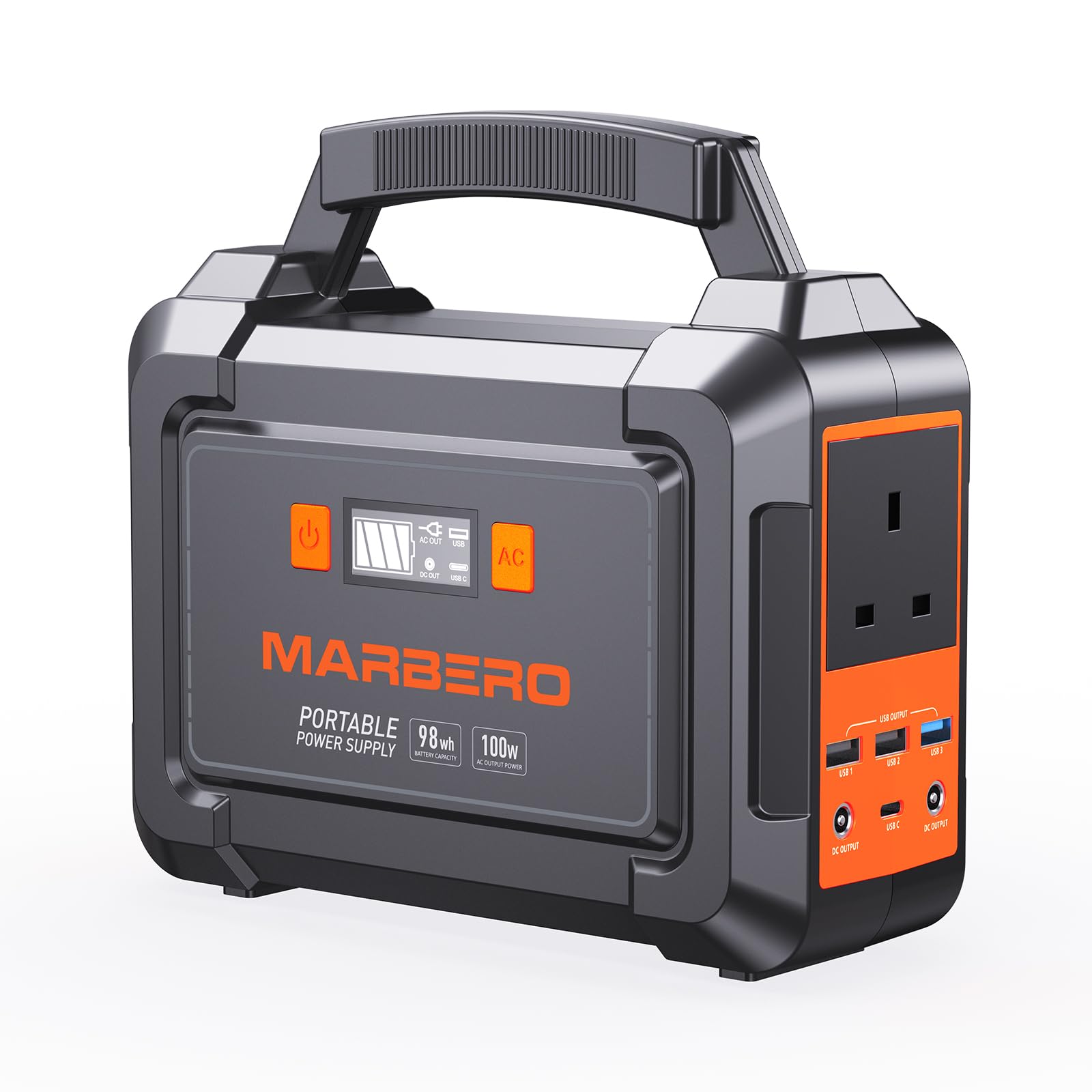
MARBERO Portable Power Station 26,400mAh Large Battery Pack 100W(150W Peak) Power Bank with Plug Socket 220V 98Wh Generator LED Light for Outdoor Adventure RV Trip Home Blackout Emergency
Our Recommendation
The Anker SOLIX C300 is the better choice for most buyers because it offers far more usable capacity, a stronger 300W/600W inverter, and LiFePO4 battery chemistry that should last much longer. It also supports 140W two-way fast charging, which makes it easier to recharge quickly between uses. The MARBERO is cheaper, but its 98Wh battery and 100W output put it in a much lower class of performance. If you want a power station you can actually depend on, Anker is the clear winner.
Detailed Comparison
Display
Neither product is a standout for display quality in the way a portable monitor or power bank screen would be, but the Anker SOLIX C300 is the better-equipped unit overall. Anker typically gives you a cleaner, more informative status interface for input/output, battery percentage, and charging mode, which matters when you’re managing limited stored energy. The MARBERO is more basic, and while its LED light is handy, it doesn’t offer the same sense of control or clarity. Winner: Anker SOLIX C300, because better monitoring is genuinely useful when every watt-hour counts.
Performance
This is the biggest gap. The Anker SOLIX C300 has a 288Wh LiFePO4 battery, 300W continuous output, and 600W surge capacity, which puts it in proper portable power station territory. That means it can handle laptops, routers, cameras, small fans, and many low-watt kitchen or camping devices far more confidently. It also supports 140W two-way fast charging, so refilling the unit is much quicker than with many entry-level rivals. The MARBERO is rated at 98Wh with 100W output and 150W peak, which is fine for phones, tablets, lights, and some small electronics, but it is a much more limited inverter and battery reserve. If you want to power anything beyond the basics, Anker wins decisively. Winner: Anker SOLIX C300.
Build Quality and Design
Anker has the stronger reputation for fit, finish, and long-term reliability, and that shows in the SOLIX C300’s positioning as a premium compact station. The LiFePO4 chemistry is a major plus: it generally offers far more charge cycles and better thermal stability than the cheaper lithium-ion packs used in many budget units. That makes it better suited to frequent use, not just emergency storage. The MARBERO’s appeal is portability and simplicity, but with a 98Wh capacity and a lower-cost design approach, it feels more like a large power bank with a mains socket than a true high-capacity station. Winner: Anker SOLIX C300, for durability, chemistry, and more serious engineering.
Battery Life
Battery life here should be judged in two ways: how long the unit lasts over years, and how long it lasts on one charge. On both counts, Anker takes it. The 288Wh capacity gives roughly three times the stored energy of the MARBERO’s 98Wh pack, so you get far more runtime for laptops, lights, and CPAP-adjacent low-power gear. LiFePO4 also typically delivers many more cycles than standard NMC-style packs, so the Anker should age much better if you use it regularly. The MARBERO can still be useful for a couple of phone top-ups or a small lamp, but it is not in the same league for endurance. Winner: Anker SOLIX C300.
Price and Value for Money
This is where the MARBERO claws back some ground. At £109.99, it is £112.91 cheaper than the Anker, and for occasional emergency use that price gap is significant. If all you need is a compact backup for charging phones, running a light, or keeping a router alive briefly, the MARBERO offers decent value. But value is not just about the sticker price; it’s about usable output per pound, battery lifespan, and what devices you can actually run. Once you factor in the Anker’s much larger 288Wh battery, 300W output, 600W surge, and LiFePO4 chemistry, the higher price starts to make sense. Winner: tie on pure upfront cost, but Anker wins on overall value for anyone who will use it more than rarely.
Game Library / Features
For these products, the equivalent of a “game library” is the feature set and real-world device compatibility. The Anker SOLIX C300 is clearly ahead thanks to its 140W two-way fast charging, larger battery, and stronger inverter. That makes it more flexible for a wider range of devices and more practical for camping, travel, and blackout use. The MARBERO does include a 220V plug socket and an LED light, which are useful, but its 100W output limit sharply narrows what it can do. Winner: Anker SOLIX C300.
Overall User Experience
The Anker is the one you buy if you want confidence. It feels like a proper portable power station rather than a compromise, and it will be far less frustrating when you need to run something slightly demanding. The MARBERO is easy to justify as a cheap emergency backup, especially if you’re on a tight budget or only need occasional charging. But if you’re trying to choose one product to rely on, the Anker’s extra battery capacity, stronger output, and better long-term chemistry make it the more satisfying ownership experience. Overall summary: the Anker SOLIX C300 is the better buy for most people because it is more powerful, more durable, and more future-proof. The MARBERO only wins if your budget is tight and your needs are very modest.
Buy the Anker SOLIX C300 if...
Buy the Anker SOLIX C300 if you want to run laptops, routers, small appliances, or multiple devices during camping trips or power cuts. It is also the better pick if you plan to use the unit regularly and care about long battery life from LiFePO4 chemistry. Choose it if you want fewer compromises and better long-term value.
Buy the MARBERO Portable Power if...
Buy the MARBERO if you only need a cheap emergency backup for phones, LED lights, tablets, or very small gadgets. It makes sense if budget is the main priority and you do not expect to draw more than 100W continuously. It is the lighter-duty option for occasional use, not serious off-grid or blackout support.
Curated by The Solar Plug on All The Top Picks
As an Amazon Associate we earn from qualifying purchases.