Budget camping backup or serious home power: which Anker SOLIX wins?
These two Anker SOLIX power stations are aimed at very different buyers, even though both use LiFePO4 batteries and smart fast-charging tech. The C300 is the compact, budget-friendly option for phones, laptops, lights, and short off-grid trips, while the C1000 Gen 2 is built to run much heavier household loads during outages. If you’re deciding between portability and real backup capability, this comparison should make the choice clear.

Anker SOLIX C300 Portable Power Station, Outdoor 288Wh LiFePO4 Battery, 300W (600W Surge) Solar Generator, 140W Two-Way Fast Charging, For Camping, Traveling, and Emergencies
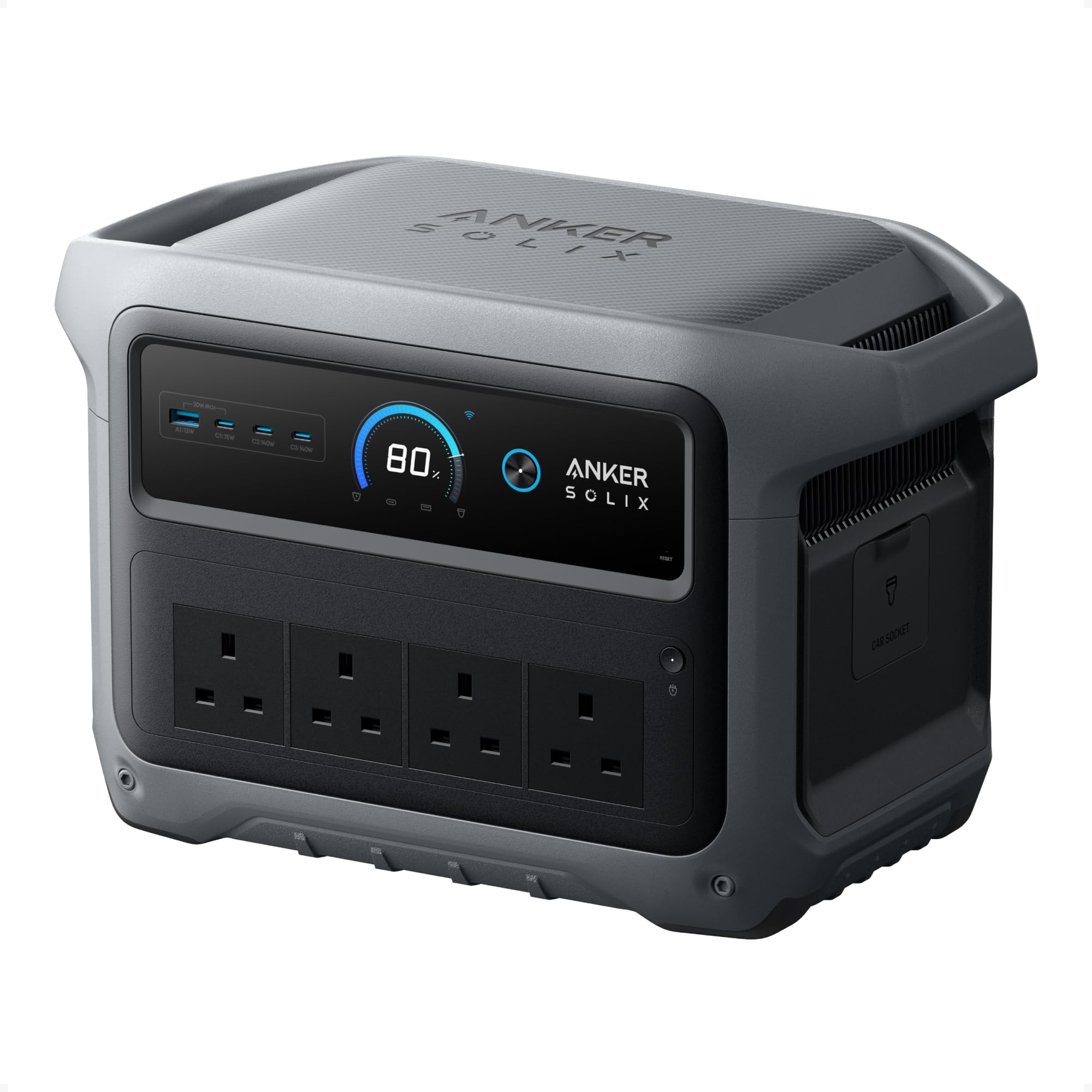
Anker SOLIX C1000 Gen 2 Portable Power Station, 2,000W (Peak 3,000W) Solar Generator, Full Charge in 49 Min, 1,024Wh LiFePO4 Battery for Home Backup, Power Outages, and Camping
Our Recommendation
The Anker SOLIX C1000 Gen 2 is the better buy for most people because it offers far more usable power: 1,024Wh capacity, 2,000W continuous output, and 3,000W peak versus the C300’s 288Wh and 300W. That means it can support real home-backup scenarios instead of just charging devices. Its 49-minute full charge claim also makes it far more convenient in an outage.
Detailed Comparison
Display
Neither unit is really a “screen-first” product, but the C1000 Gen 2 wins on user experience because higher-end power stations typically provide a more informative display and better app-based monitoring for load, input, and remaining runtime. The C300 will still give you the essentials, but it is clearly the simpler unit aimed at basic camping and emergency use. Winner: C1000 Gen 2, because a larger-capacity station benefits more from richer monitoring and clearer power management.
Performance
This is the biggest separation in the comparison. The C300 offers 300W output with a 600W surge from a 288Wh LiFePO4 battery, which is fine for charging phones, tablets, cameras, routers, laptops, and some small appliances. The C1000 Gen 2 is in a different league at 2,000W continuous output with a 3,000W peak and a 1,024Wh LiFePO4 battery, meaning it can handle kettles? No, not reliably in UK terms, but it is far more suitable for high-draw essentials such as a microwave, coffee machine, power tools, a fridge, or multiple devices at once. For actual emergency backup, the C1000 Gen 2 is the clear winner because output matters as much as capacity, and 2,000W changes what you can realistically run.
Build quality and design
Both are from Anker, so you can expect good quality control, sensible thermal management, and a polished product experience. The C300’s advantage is portability: at 288Wh it is easier to carry, store in a flat, and take on trains, road trips, or camping weekends. The C1000 Gen 2 is larger and heavier by necessity, but that extra size buys you a much more capable inverter, a much larger battery, and better suitability for home backup. If your priority is a grab-and-go unit for renters or flat-dwellers, the C300 feels more practical; if you want a serious “leave it by the wall and use it when needed” device, the C1000 Gen 2 is better engineered for the job. Winner: tie, because portability favours the C300 while capability and system design favour the C1000 Gen 2.
Battery life
On raw energy storage, the C1000 Gen 2 wins decisively with 1,024Wh versus 288Wh. That is more than three times the capacity, so you can expect dramatically longer runtime for every device type. The C300’s LiFePO4 chemistry is a plus because it should offer long cycle life and better heat stability than older NMC-based packs, but capacity still limits how useful it is beyond short outings or light backup. The C1000 Gen 2 also uses LiFePO4, so you get the same chemistry benefits with much more stored energy. For anyone worrying about outages, the extra watt-hours are the difference between topping up gadgets and actually keeping a fridge, lights, and communications running. Winner: C1000 Gen 2.
Price and value for money
The C300 costs £222.90, while the C1000 Gen 2 costs £599.00, a difference of £376.10. On a pure upfront basis, the C300 is much easier to justify, especially if you only need emergency charging, camping power, or a compact solar generator for occasional use. But value is not just price; it is what you can power per pound spent. The C1000 Gen 2 is expensive, but the jump from 288Wh/300W to 1,024Wh/2,000W is substantial enough that it actually delivers meaningful home-backup capability rather than just convenience. If you only need light-duty power, the C300 is better value. If you need genuine whole-lifestyle resilience, the C1000 Gen 2 is the better long-term investment. Winner: depends on use case, but for most buyers seeking emergency readiness, C300 wins on budget value and C1000 Gen 2 wins on capability value.
Game library/features
Neither product has a “game library” in the literal sense, so the real comparison is feature set. The C300’s standout feature is 140W two-way fast charging, which is excellent for quickly recharging the unit and keeping the whole setup convenient for travel. The C1000 Gen 2’s standout feature is much faster system-level charging, with a full charge claimed in 49 minutes, plus the much higher inverter output and broader usefulness around the home. For UK users, that means the C300 is more of a smart personal power bank on steroids, while the C1000 Gen 2 is a true backup power station. Winner: C1000 Gen 2, because its feature set is more versatile and more meaningful in real-world use.
Overall user experience
The C300 is the easier recommendation if your needs are simple: charging devices, running a small fan, powering lights, and keeping essentials alive during short outages. It is cheaper, lighter, and less intimidating, which suits renters and flat-dwellers who want a no-fuss backup option. The C1000 Gen 2 is the better experience if you want confidence rather than convenience. Its much higher output, much larger battery, and near-instant charging make it far more capable for home backup, and that matters when the power actually goes out. Overall, the C300 is the better compact travel companion, but the C1000 Gen 2 is the better all-round power solution.
Overall summary: choose the C300 if you want the lowest-cost, most portable Anker SOLIX for phones, laptops, and light emergency use. Choose the C1000 Gen 2 if you want a real backup power station that can handle serious loads and longer outages. The winner on capability, practicality, and long-term usefulness is the C1000 Gen 2.
Buy the Anker SOLIX C300 if...
Buy Product A if you mainly want a compact, affordable power station for camping, travel, or keeping phones, laptops, and lights running during short outages. It is the better fit for renters or flat-dwellers who need something easy to store and carry, and who do not need to run high-wattage appliances. At £222.90, it is a much lower-risk purchase if your power needs are modest.
Buy the Anker SOLIX C1000 if...
Buy Product B if you want genuine home-backup capability and the ability to run high-draw appliances or multiple devices at once. It is the right choice if you care about resilience during power cuts, faster recharge times, and a much larger battery reserve. At £599, it costs more, but it replaces a lot of limitations that the C300 simply cannot overcome.
Curated by The Solar Plug on All The Top Picks
As an Amazon Associate we earn from qualifying purchases.