Big-Backup Power or Pocket-Size Portability: Which Anker SOLIX Wins?
If you’re choosing between these two Anker SOLIX power stations, you’re really deciding between serious home-backup capability and ultra-portable convenience. The C1000 Gen 2 is built to run larger appliances and cover outages, while the C300 is aimed at lighter loads, travel, and grab-and-go emergency use. Both use LiFePO4 batteries, which is a major plus for cycle life and long-term reliability. The right pick depends on whether you want a compact companion or a genuinely useful backup power hub.
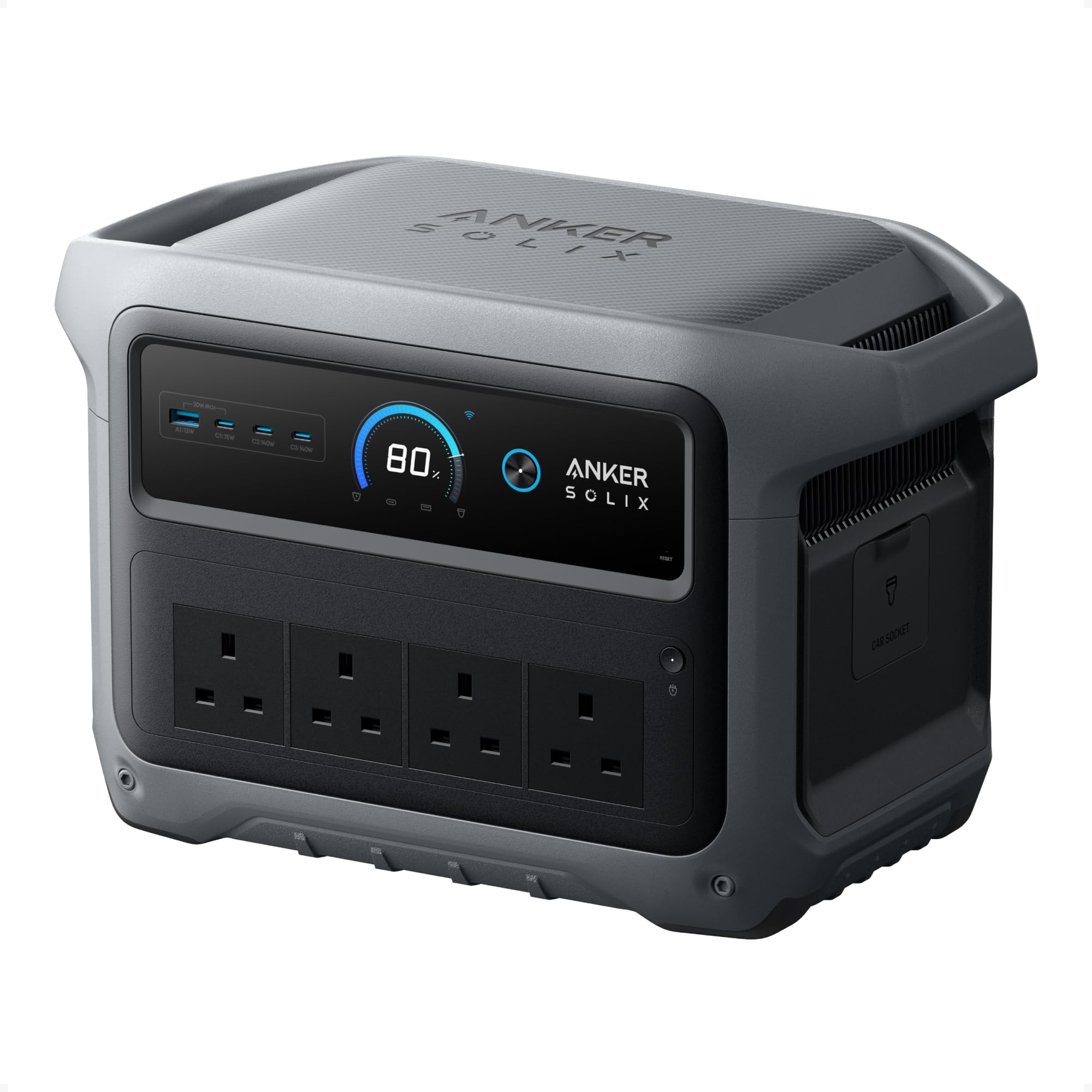
Anker SOLIX C1000 Gen 2 Portable Power Station, 2,000W (Peak 3,000W) Solar Generator, Full Charge in 49 Min, 1,024Wh LiFePO4 Battery for Home Backup, Power Outages, and Camping

Anker SOLIX C300 Portable Power Station, Outdoor 288Wh LiFePO4 Battery, 300W (600W Surge) Solar Generator, 140W Two-Way Fast Charging, For Camping, Traveling, and Emergencies
Our Recommendation
Product A is the definitive recommendation because it offers far more usable power: 2,000W continuous output, 3,000W peak, and 1,024Wh of LiFePO4 storage. That makes it suitable for home backup, heavier appliances, and longer outages, while still being portable enough for camping. Product B is cheaper and more compact, but its 300W output and 288Wh capacity limit it to light-duty use.
Detailed Comparison
Display
Neither product is a laptop or TV, so there’s no display-quality contest in the usual sense. In practical terms, the important “screen” factor here is the onboard status display and app visibility, and the C1000 Gen 2 wins because it’s the more serious power station with a better fit for monitoring higher loads. With a 1,024Wh battery and 2,000W output, you’re more likely to care about precise battery percentage, input/output wattage, and estimated runtime. Winner: Product A, because the more capable system benefits more from detailed monitoring.
Performance
This is the clearest category win. Product A offers 2,000W continuous output with a 3,000W peak, which puts it in a different league from Product B’s 300W output and 600W surge. In real-world UK use, that means the C1000 Gen 2 can handle kettles, microwaves, coffee machines, power tools, and many fridge/freezer scenarios, while the C300 is limited to phones, laptops, lights, routers, tablets, and small DC loads. The C1000’s 1,024Wh LiFePO4 battery also gives you far more usable runtime than the C300’s 288Wh pack. Winner: Product A by a huge margin.
Build Quality and Design
Both are from Anker, both use LiFePO4 chemistry, and both should be viewed as well-engineered rather than budget gimmicks. The C300’s smaller battery and lower output make it physically easier to carry, pack, and store, so it has the edge for portability and simple emergency kits. But the C1000 Gen 2 is the more substantial and versatile product, and that usually comes with better thermal headroom, more robust power delivery, and a design philosophy aimed at heavier duty use. If you value compactness, B wins; if you value a more capable, premium-feeling power station, A wins. Overall winner: Product A, because it’s the better-built tool for demanding use.
Battery Life
On paper, Product A is the obvious winner because 1,024Wh is more than three times the capacity of Product B’s 288Wh. That translates into far longer runtime for everything from CPAP-adjacent low-draw devices to laptops, routers, and kitchen appliances. The LiFePO4 chemistry in both units is excellent for cycle life, but the larger battery in the C1000 Gen 2 gives it much more practical endurance per charge. Product B still makes sense if you only need a few top-ups or a short emergency reserve, but it will run out quickly if you try to use it like a home backup unit. Winner: Product A.
Price and Value for Money
Product B is much cheaper at £222.90, versus £599 for Product A, a difference of £376.10. If your needs are modest, the C300 is strong value because it gives you a reputable brand, LiFePO4 chemistry, and enough output for basic devices at a relatively low entry cost. But value is not just about the sticker price; it’s about what the power station can actually do. The C1000 Gen 2’s far higher output, much bigger battery, and faster charging make it better value for anyone who will use its capabilities. Winner: Product B for budget buyers, Product A for overall value if you need real power.
Game Library / Features
For a power station, the equivalent of “game library” is feature set and use-case flexibility. Product A wins because its 2,000W output and 1,024Wh capacity open the door to far more appliances and emergency scenarios. The C1000 Gen 2 is the one you’d choose for home backup, outage resilience, and higher-draw camping setups with cool boxes, induction-style gear, or charging multiple devices at once. Product B’s feature set is simpler and narrower, but that simplicity is exactly why it suits travel, festival bags, and light emergency kits. Winner: Product A for features and flexibility.
Overall User Experience
For everyday convenience, the C300 is easier to live with because it’s smaller, cheaper, and less intimidating. It’s the kind of power station you can keep in a cupboard, take on trains or road trips, and use without worrying about weight or overkill. But the C1000 Gen 2 delivers a much more satisfying experience when you actually need backup power that can do meaningful work. Its 49-minute full-charge claim is especially compelling for UK users who want a fast refill between outages or before a weekend away. Winner: Product A for serious users; Product B for lightweight convenience.
Overall summary: The Anker SOLIX C1000 Gen 2 is the clear winner if you want a true home-backup-capable power station with enough output and battery capacity to matter during outages. The Anker SOLIX C300 is a good lower-cost, highly portable option for charging essentials, but it is not in the same class for performance or resilience. If your priority is maximum usefulness, buy the C1000 Gen 2. If your priority is saving money and keeping things compact, the C300 is the smarter buy.
Buy the Anker SOLIX C1000 if...
Buy Product A if you want a power station that can realistically support a fridge, kettle, microwave, or multiple devices during an outage. It’s also the better choice if you value fast recharge times and want one unit that can cover both home backup and serious camping use.
Buy the Anker SOLIX C300 if...
Buy Product B if you mainly need a lightweight emergency charger for phones, laptops, lights, routers, and small gadgets. It’s the better pick for travellers, festival-goers, and renters who want something affordable and easy to store without paying for power they won’t use.
Curated by The Solar Plug on All The Top Picks
As an Amazon Associate we earn from qualifying purchases.